When to Dive in Puerto Rico: Month-by-Month Weather, Water Visibility, and Conditions
Timing is everything in dive travel. Book the right window, and you are gliding through eighty feet of crystal-clear water along a sunlit Caribbean shelf. Book the wrong coast during a seasonal swell, and you will spend your morning staring at churning Atlantic surf from the beach.
Puerto Rico offers world-class diving across all twelve months of the year, but the island does not experience uniform weather. Split down the center by the Cordillera Central mountain range, the island features two distinct marine environments: the rough, exposed North Atlantic coast, and the calm, rain-sheltered Caribbean waters of the south and southwest.
Understanding how trade winds, regional rain patterns, and seasonal currents shift throughout the year is the key to unlocking peak visibility and calm seas. Here is your definitive month-by-month guide to ocean conditions in Puerto Rico.
The Seasonal Framework: Understanding Puerto Rico’s Two Coasts
Before planning around specific dates, keep this golden geographic rule in mind:
- The North Shore (San Juan & Atlantic Side): Faces open oceanic swells. Winter brings heavy groundswells favored by surfers, which frequently reduces nearshore visibility to twenty or thirty feet. Calm conditions return primarily in late spring and summer.
- The South & Southwest Shore (Guánica, Ensenada, La Parguera): Sits in a natural rain shadow created by the central mountains. Sheltered from northern swells, this coast receives dramatically less annual rainfall and river runoff. As a result, the southern continental shelf offers sixty to one hundred feet of visibility and glassy morning departures throughout nearly the entire year.
Winter Diving: December through February
Topside Weather & Water Temperatures
Winter in Puerto Rico brings warm, breezy days with average air temperatures around 82°F (28°C) and minimal humidity. Underwater, water temperatures reach their annual low, hovering between 78°F and 80°F (25°C to 27°C). A full 3mm or 5mm wetsuit is recommended to stay comfortable across multiple two-tank charters.
Ocean Conditions & Visibility
This is peak surf season on the northern beaches. Cold fronts pushing down from North America produce powerful Atlantic swells, making San Juan shore entries unpredictable and often murky.
Conversely, the southern coast around Guánica remains calm and well-protected. Visibility along the southern wall consistently reaches seventy to eighty feet.
Marine Wildlife Highlights
Winter marks the beginning of the annual humpback whale migration through the Mona Passage off the western coast. While underwater encounters on scuba are rare and strictly regulated, divers running out to offshore shelf drop-offs often spot whales breaching from the boat and can hear their haunting songs echoing through the water during safety stops.
Spring Transition: March through May
Topside Weather & Water Temperatures
Spring is characterized by rising temperatures and gentle coastal conditions. Air temperatures climb into the mid-80s, while water temperatures warm to a comfortable 80°F to 82°F (27°C to 28°C). A standard 3mm shorty or full suit provides plenty of thermal protection.
Ocean Conditions & Visibility
As the North Atlantic storm tracks fade, winter swells subside. Spring brings some of the most stable, glassy morning waters of the year.
Because the rainy season has not yet arrived, coastal runoff is negligible. Visibility across the southern shelf frequently spikes past ninety to one hundred feet, providing breath-taking vistas down vertical drop-offs. In San Juan, shallow reefs settle down, making urban shore diving significantly more reliable than in preceding months.
Marine Wildlife Highlights
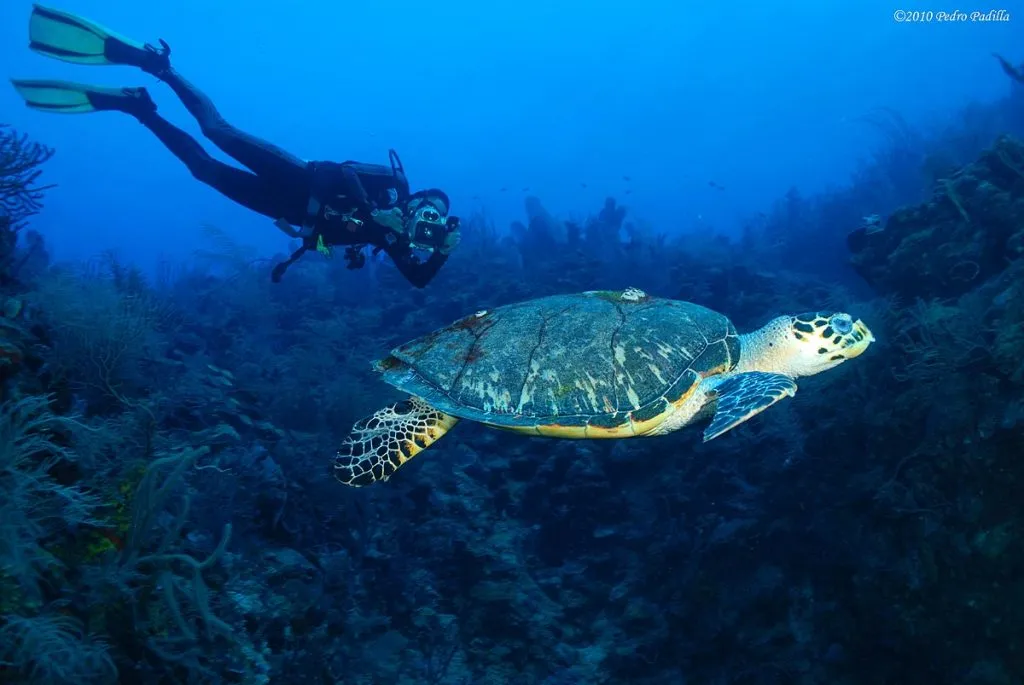
Spring waters are rich in pelagic and reef activity. Spotted eagle rays gather in larger numbers along drop-offs and sandy channels, while green and hawksbill sea turtles become fixtures around shallow patch reefs and mangrove edges.
Summer Peak: June through August
Topside Weather & Water Temperatures
Summer brings tropical heat, with topside temperatures averaging 88°F to 90°F (31°C to 32°C). The ocean reaches bathwater warmth, averaging 84°F to 86°F (29°C to 30°C). A dive skin or simple rashguard is often all you need for comfort.
Ocean Conditions & Visibility
If pristine visibility and flat-calm water are your top priorities, summer is a prime window. Trade winds often lay flat in the early morning, turning the Caribbean into a mirror.
Visibility regularly exceeds one hundred feet along the south coast shelf. Even northern dive sites in San Juan enjoy their clearest, calmest conditions of the year. While brief afternoon tropical showers are common, they typically occur well after morning boat charters have returned to the dock, having virtually no impact on offshore water clarity.
Marine Wildlife Highlights
Warm summer waters accelerate reef activity. Massive schools of baitfish pack into mangrove channels and shallow reefs, triggering active hunting behavior from tarpon, jacks, and barracuda. Late summer also aligns with the annual coral spawning phenomenon, where entire reef systems release gametes in synchrony after full moon cycles.
Autumn Transitions: September through November
Topside Weather & Water Temperatures
Autumn represents the heart of the Caribbean’s low season. Air temperatures remain warm in the upper 80s, and water temperatures hold at their peak around 84°F (29°C).
Ocean Conditions & Visibility
This period coincides with peak tropical weather and hurricane season. Tropical disturbances can pass through, generating wind and rain that temporarily disrupt diving schedules. Savvy travelers monitor forecasts closely and invest in flexible booking policies.
Between weather fronts, however, autumn offers magnificent conditions. The absence of heavy tourist crowds means dive boats run with exceptionally small groups. Along the arid southwest coast, where rainfall remains significantly lower than in the rainforest interior, visibility remains remarkably solid—hovering between sixty and eighty feet on normal days.
Marine Wildlife Highlights
With fewer boats and divers on the reefs, marine life becomes visibly bolder. Nurse sharks can be seen actively cruising rather than resting under ledges, southern stingrays forage freely along the flats, and delicate macro life—such as seahorses, frogfish, and nudibranchs—thrives in the quiet coves.
Quick Decision Guide: Choosing Your Ideal Month
- For the Absolute Clearest Water and Flat Seas: Book between May and July. You will experience maximum horizontal visibility, mirror-like morning surfaces, and warm water.
- For Whale Songs and Escaping Winter Chill: Book between January and March. Head straight to the southern coast around Guánica and Ensenada to bypass northern winter swells.
- For Warmest Water Temperatures: Plan your trip between July and October, when the Caribbean sits at a comfortable 84°F to 86°F.
- For Avoiding Crowds and Enjoying Intimate Charters: Target April, May, or November for an ideal balance of calm seas, open schedules, and tranquil reefs.
Whenever you land on the calendar, Puerto Rico delivers extraordinary diving. Keep your eyes on the morning conditions, head to the sheltered Caribbean coast, and let the drop-offs show you the best of the Caribbean.