Private Boat Charters in Southwest Puerto Rico
When an academic department, environmental NGO, or commercial contractor deploys an offshore field team, the entire investment hinges on a single operational bottleneck: vessel logistics. A crew that cannot navigate local bathymetry, a captain who fails to understand dynamic station-keeping over sensitive seabed infrastructure, or an inflexible charter operator accustomed only to casual beach-hopping can derail grant deliverables and commercial deadlines in a single morning.
Southwest Puerto Rico—anchored by Guánica, Ensenada, and the La Parguera marine corridor—is one of the most critical marine research corridors in the Western Hemisphere. Home to protected mangrove lagoons, offshore coral nurseries, biological field stations, and the sheer drop-offs of the southern insular shelf, this aquatic laboratory requires marine logistics built for technical operations.
Whether your mission involves outplanting nursery-reared corals, deploying environmental acoustic arrays, collecting sediment cores, or executing hydrographic surveys, here is how dedicated, small-vessel private charters power scientific and commercial success in the waters of southern Puerto Rico.
The Operational Edge: Why Southwest Puerto Rico Demands Dedicated Marine Platforms
The waters flanking Guánica and La Parguera are not standard recreational waterways. They are complex ecosystems defined by strict environmental protections, dynamic coral shelves, and variable open-water transitions.
- Immediate Access to Continental Shelf Drop-Offs: Unlike northern coasts where ocean shelf drop-offs sit miles out past heavy Atlantic surf, the southern shelf lies just minutes from sheltered docks in Ensenada and Guánica. This proximity allows research teams to run deep-water and shallow-water profiles within the same operating window, slashing transit time and maximizing sample collection.
- The Arid Rain-Shadow Advantage: Sheltered by the Cordillera Central, the southwest coast experiences minimal terrestrial runoff. Exceptional underwater visibility—often extending from 80 to over 100 feet—provides photographic, photogrammetry, and visual census teams with ideal water clarity throughout the year.
- Sensitive Ecosystem Navigation: The coastline features shallow mangrove channels, fragile seagrass flats, and offshore cays. Operating here requires specialized, shallow-draft vessels and deep local helm experience to maneuver without scarring seagrass beds or damaging living hard corals.
Mission Capabilities: Academic, Ecological, and Industrial Use Cases
A purpose-built commercial charter platform bridges the gap between scientific intent and aquatic execution. Private chartered platforms in southwest Puerto Rico routinely support a broad scope of operational profiles:
1. Coral Restoration and Nursery Outplanting
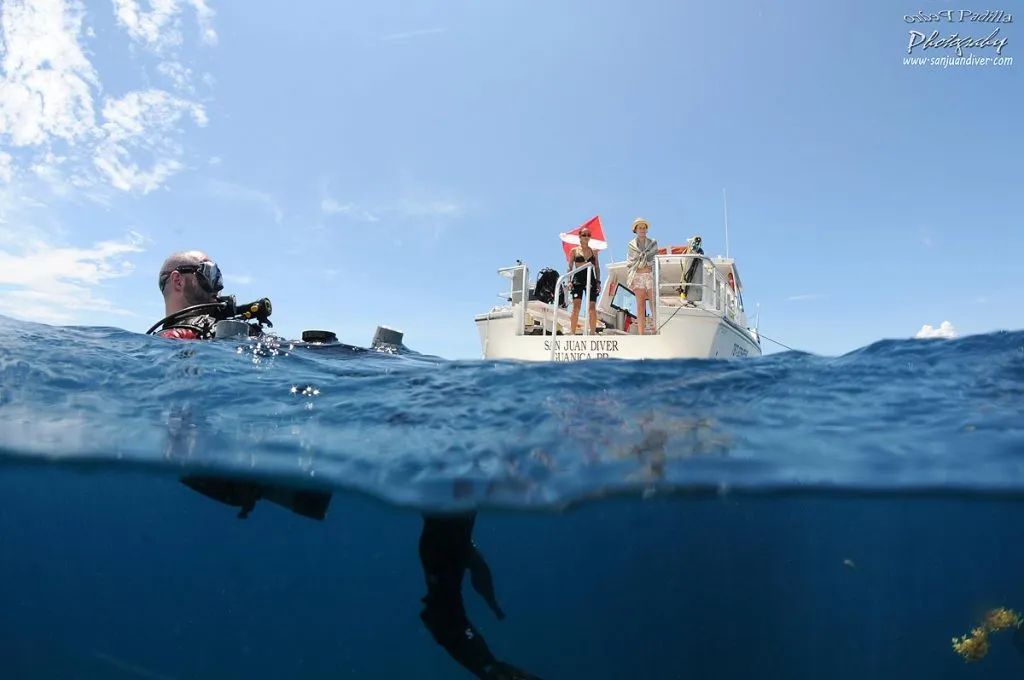
Coral reef restoration initiatives require specialized logistics. Vessels must transport heavy dive teams, specialized rigging, sub-surface drill equipment, and live coral fragments safely between onshore aquaculture nurseries and offshore reef sites. The vessel acts as a mobile dive platform: facilitating controlled entries, managing dive gear rotations, and maintaining precise surface standby while restoration divers secure staghorn and elkhorn colonies to degraded substrates.
2. University Field Study and Marine Biology Courses
Every semester, universities and research institutions deploy field programs to study tropical marine ecology, fisheries management, and oceanography. Charters designed for research groups accommodate faculty and students with the space and deck layout necessary for plankton tows, water quality sampling (YSI profiles, Secchi disk readings), and benthic habitat mapping. Direct dock departures keep field schools tightly on schedule.
3. Acoustic and Sensor Array Deployments
From acoustic Doppler current profilers (ADCP) to hydrophone arrays monitoring cetacean movement or passive reef acoustics, oceanographic research relies on sensitive instrument deployments. Vessel operators must execute precise GPS waypoint holding, smooth deployment over the transom or gunwale, and meticulous surface monitoring during diver-assisted recoveries.
4. Commercial Marine Surveys, Inspection, and Diving Support
Commercial engineering, coastal survey, and utility projects require vessel platforms capable of handling technical workflows. Whether supporting side-scan sonar runs, underwater structural inspections of maritime infrastructure, benthic habitat delineation, or environmental impact assessments, private charters provide dedicated surface support, dive tender coordination, and emergency response readiness.
The Strategic Advantage of Small-Group, Small-Vessel Deployments
Large offshore supply vessels or oversized party catamarans are inefficient for technical field projects. Small-group, dedicated platforms (typically supporting teams of four to six operational personnel) deliver distinct tactical advantages:
- Agility and Shallow Access: Maneuverable center consoles or custom dive platforms navigate tight mangrove estuaries and shallow barrier reefs that are completely inaccessible to larger ships.
- Operational Flexibility: Marine research is subject to changing weather, shifting equipment calibrations, and unpredictable marine life behavior. Private charters operate on your project’s schedule—not a tourist timetable. Need to be on station at sunrise for early-morning drift surveys? Need to extend bottom time by two hours because a sensor failed to initialize? A dedicated charter adapts in real time.
- Reduced Wake and Acoustic Disruption: Smaller, well-maintained outboards minimize turbulence and underwater acoustic signatures, protecting sensitive marine mammals and fragile shallow-water shorelines during close-quarters operations.
- Cost Efficiency for Grant-Funded Projects: Federal, state, and academic grants operate on disciplined budgets. Small-vessel charters eliminate the exorbitant fuel burns, multi-crew overhead, and mobilization fees associated with large industrial ships.
Logistical Integration: The Stay-and-Deploy Advantage in Ensenada
Logistical friction multiplies when teams must commute across the island with delicate gear. In Ensenada and Guánica, private charter operators offer an operational model rarely found in the Caribbean: direct integration between dock facilities, technical dive operations, and on-site waterfront accommodations.
Deploying field personnel directly from waterfront staging sites—where crews sleep, charge sensitive camera and sensor rigs, assemble dive gear, and walk straight onto the boat dock—removes transit risks completely. It protects fragile equipment from road vibration, eliminates morning vehicle coordination, and ensures that the transition from dry lab to open water takes minutes rather than hours.
Charter Vetting Checklist: Ensuring Field Readiness
Before awarding a marine support contract or booking vessel time for your team, ensure your operator satisfies these technical and regulatory baselines:
- Licensed Master Captains: Vessels must be commanded by credentialed, experienced captains who understand dynamic maritime safety, diver-down operations, and localized shelf currents.
- Safety and First Aid Infrastructure: The vessel must carry dedicated emergency oxygen kits, comprehensive marine first-aid supplies, functional VHF marine communications, and Coast Guard-compliant safety gear.
- Deck Space and Clear Gunwales: The working deck must provide unobstructed room for dive cylinders, scientific totes, sample coolers, and data logging equipment without creating tripping hazards.
- Environmental Permits and Regulatory Awareness: Operators must respect local marine reserves and hold proper commercial permitting, ensuring your field data is gathered in full compliance with Department of Natural and Environmental Resources (DRNA) guidelines.
Fieldwork demands precision, resilience, and local water knowledge. When your project demands reliable vessel support along the reefs and walls of southwest Puerto Rico, partnering with a dedicated local marine charter ensures your objectives are met safely, efficiently, and on schedule.