Daily Wall Diving in Guánica and La Parguera: A Guide to Southwest Diving Tours
In global travel marketing, destinations often rely on manufactured excitement. They build artificial attractions, stage cultural encounters, and inflate modest highlights into headline adventures.
Then there are rare corners of the globe where the geology does the selling for you.
Southwest Puerto Rico is one of those places. Anchored by the coastal waters of Guánica, Ensenada, and La Parguera, this region hosts a geological marvel that requires no exaggeration: a continuous continental shelf running for more than twenty nautical miles, plunging straight into an oceanic abyss.
Locals and seasoned global divers know it simply as The Wall.
If you are planning a Caribbean dive trip and refuse to settle for shallow, crowded tourist coves, this is your definitive field guide to daily wall diving tours across Puerto Rico’s southwest coast.
The Landscape: Why the Southwest Shelf is a Caribbean Standout
To understand the quality of diving here, you have to look at the regional bathymetry.
Unlike the northern coast of Puerto Rico, which faces the open, wind-swept Atlantic Ocean, the southern shoreline borders the deep Caribbean basin. Here, the continental shelf sits remarkably close to land.
Dive boats departing from calm, protected bays in Ensenada and Guánica reach the edge of the shelf in just ten to fifteen minutes. The transition is sudden and dramatic. You navigate across shallow coastal flats and mangrove nurseries, drop anchor or set a drift line, and descend through water so calm it feels like a mountain lake.
At fifty to sixty feet, you glide across a healthy reef flat carpeted in hard corals, gorgonians, and sea fans. Then, without warning, the seafloor ends.
The edge drops vertically from sixty feet down to past fifteen hundred feet. Hovering over that precipice delivers one of the purest adrenaline rushes in adventure travel: the sensation of floating in mid-air off the edge of an underwater mountain range, suspended between bright tropical sunlight above and deep indigo space below.
Because the southwest lies in the rain shadow of Puerto Rico’s central mountain corridor, terrestrial runoff is minimal. The ocean here enjoys consistent horizontal visibility ranging between sixty and one hundred feet, with glassy morning surface conditions that rival any premier dive destination in the hemisphere.
Anatomy of a Daily Charter: What to Expect on the Water
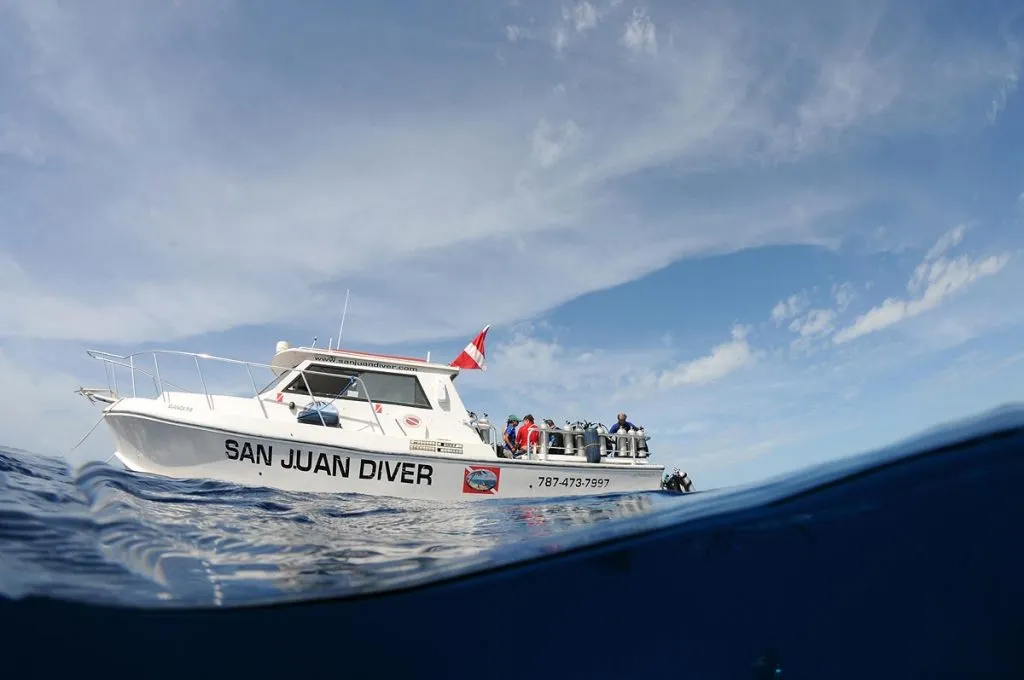
Daily wall diving tours in Guánica and La Parguera are engineered around diver comfort, small-group intimacy, and optimal morning conditions.
1. The Early-Morning Launch
The best diving on the south coast happens before midday winds pick up. Charters typically gather at the dock around 7:30 or 8:00 AM.
Because operations in Ensenada depart directly from waterfront facilities, boarding is seamless. There is no dragging gear across public beaches or fighting metropolitan traffic. You step aboard, run through equipment checks with your divemaster, and take your seat as the vessel clears the harbor.
2. The First Dive: The Deep Drop
The first tank of the morning is dedicated to the wall itself.
After a thorough site briefing detailing depth limits, gas turnarounds, and current dynamics, divers roll backward into warm Caribbean blue. The team descends along the top terrace, reaches the lip, and glides over the edge.
Typical profiles for dive one take certified divers between seventy and one hundred feet along the face of the drop-off. Here, massive elephant ear sponges and weeping black coral trees extend into the gentle current. As you cruise along the cliff face, you maintain a watchful eye toward the open blue, where pelagic species travel along the continental current lines.
3. The Surface Interval: Coastal Views and Calm Water
After completing a controlled ascent and a mandatory safety stop, divers return to the boat for a relaxed, forty-five to sixty-minute surface interval.
Rather than bobbing in rough, open-ocean chop, charters frequently cruise into sheltered coves or idle alongside the mangroves of the Guánica coastline. Crew members serve fresh local tropical fruit, water, and light snacks while the boat repositions for the second site.
4. The Second Dive: Canyons, Caverns, and Shallows
The second tank is tailored to shallower reef structures, typically ranging between thirty-five and fifty-five feet.
Sites like natural coral swim-throughs, spur-and-groove formations, and limestone canyons take center stage. With abundant ambient light pouring through the water column, photographers and nature enthusiasts enjoy extended bottom times surrounded by reef fish, grazing sea turtles, and intricate macro life.
By late morning or early afternoon, the boat is tied back to the dock, leaving the rest of your day completely open to explore the coast, hike local trails, or relax along the water.
Signature Dive Sites Along the Southwest Edge
While the wall stretches for miles, local captains navigate to specific coordinates that highlight the dramatic variety of the underwater terrain.
The Black Wall
Named for the dense colonies of antipatharian black coral that flourish in its deeper, shaded zones, this site is a quintessential Caribbean wall dive. The sheer vertical drop begins around sixty feet and falls away cleanly into the abyss. The face is encrusted with giant barrel sponges, brilliant orange rope sponges, and deep-water gorgonians. It is a favored corridor for cruising pelagic species and deep-water macro critters.
The Chimney
A dream for divers who love dynamic underwater architecture, The Chimney features an ancient geological fracture cutting vertically through the limestone shelf. Divers enter a fissure on the reef flat at fifty feet, drop through an enclosed cavern illuminated by beams of natural sunlight, and exit horizontally through a portal on the vertical wall face into open water.
Fallen Rock
A monumental slab of the limestone shelf sheared away from the main wall centuries ago, creating an underwater amphitheater between the drop-off and the freestanding monolith. The resulting underwater canyon funnels ocean currents, creating a feeding highway for schools of horse-eye jacks, permits, barracudas, and cruising spotted eagle rays.
The Marine Life Encounter
Because southwest Puerto Rico balances low coastal development with established marine reserves, the density of marine life along the wall is remarkable.
- Pelagics and Predators: The proximity to the deep abyssal trench makes close encounters with open-ocean species an everyday possibility. Certified divers regularly encounter Caribbean reef sharks patrolling the drop-off, solitary great barracudas holding station against the surge, and pods of spotted eagle rays banking effortlessly in formation along the reef crest.
- Turtles and Rays: Hawksbill and green sea turtles are common residents along the upper shelf, grazing on sponges and resting under coral ledges. Southern stingrays and yellow stingrays forage along the sandy gullies leading to the drop.
- The Living Reef: Large schools of creole wrasse cascade down the wall face like purple waterfalls. French and queen angelfish cruise the ledges in mated pairs, while parrotfish, surgeonfish, and moray eels populate the coral heads.
Essential Travel and Booking Logistics
To make your southwest diving expedition effortless, keep these operational pointers in mind:
Certification Requirements
While shallow introductory diving is available in protected coves, diving the outer wall requires an internationally recognized Open Water Diver certification (or higher). Divers who hold an Advanced Open Water certification will enjoy greater flexibility to explore deeper sections of the wall down to one hundred feet.
When to Book
The southwest shelf is diveable all twelve months of the year.
- May through August: Delivers the flattest seas, highest water temperatures (mid-80s Fahrenheit), and maximum horizontal visibility exceeding one hundred feet.
- December through April: Brings comfortable air temperatures, mild water (around 78 to 80 degrees), and an escape from winter cold. While northern Puerto Rico experiences heavy surf during these months, the southwest remains sheltered and calm.
Airport Routing
If your primary goal in Puerto Rico is diving the southwest walls, avoid the long cross-island highway drive from San Juan by flying into Ponce (PSE) or Aguadilla (BQN). Both regional airports put you within a thirty to sixty-minute drive of Guánica and Ensenada. If you fly into San Juan (SJU), rent a car for the scenic two-hour drive across the central mountain range.
The Pre-Flight Surface Interval
Never compromise on your safety buffer. After completing multiple consecutive days of two-tank charters along the wall, maintain a strict twenty-four-hour surface interval before boarding an airplane or driving up through the high-elevation peaks of Puerto Rico’s central mountains.
The Takeaway: Stop Looking at the Surface
Most tourists visit the Caribbean and only ever experience the fringe of the ocean: wading in ankle-deep water, riding jet skis across the surface, or gazing at a horizon from a hotel balcony.
Daily wall diving tours in Guánica and La Parguera offer the antidote to ordinary travel. They invite you to cross the boundary, step off the edge of the continental shelf, and hang suspended above a vast, silent wilderness.
The wall is waiting. Pack your certification card, book your morning tanks, and come see what real Caribbean diving looks like.