Marine Life of Puerto Rico: What Species to Expect Underwater
When you descend beneath the surface of Puerto Rico’s coastal waters, you are stepping into one of the most dynamic# Marine Life of Puerto Rico: What Species to Expect Underwater
Positioned at the boundary where the Atlantic Ocean collides with the Caribbean Sea, Puerto Rico is encircled by deep oceanic trenches, sprawling barrier reefs, sheltered mangrove lagoons, and sunlit seagrass beds. This complex marine architecture supports one of the most vibrant aquatic ecosystems in the region. Whether diving the dramatic vertical drop-offs of the southern coast or snorkeling the shallow cays to the east, here is the extraordinary spectrum of marine life you can expect to encounter beneath the surface.
Coral Reef Architects and Invertebrates
The bedrock of Puerto Rico’s underwater biomass is its reef-building stony coral colonies. Branching elkhorn and staghorn corals dominate shallower surge zones, while massive brain corals, star corals, and boulder corals form the structural labyrinth of deeper walls.
Weaving between these calcified structures, soft corals such as sea fans, sea plumes, and gorgonians sway with the surge. Tucked inside the crevices are the reef’s essential clean-up crew:
- Caribbean Spiny Lobster: Lacking the prominent claws of their northern counterparts, these nocturnal scavengers betray their presence during daylight with long, white-spotted antennae protruding from rocky overhangs.
- Spotted Moray and Green Moray Eels: Often seen with only their heads exposed, rhythmically undulating their mouths to circulate water through their gills.
- Long-Spined Sea Urchins (Diadema antillarum): Crucial reef herbivores with needle-like black spines, vital for keeping opportunistic algae from suffocating live coral.
- Common Octopus: Master camouflage artists that hunt crabs and bivalves across rubble flats, flashing dynamic textures and colors in fractions of a second.
Grazers and Macrofauna of the Seagrass Flats
In the calm, nutrient-rich coastal zones and back-reef lagoons, expansive beds of turtle grass (Thalassia testudinum) and manatee grass act as both nursery and primary feeding grounds for some of the island’s most iconic larger species.
- Antillean Manatee: A protected subspecies of the West Indian manatee, these gentle, slow-moving mammals frequent coastal shallows, river mouths, and mangrove channels. Seeing a 1,000-pound adult grazing peacefully on the seabed is an unforgettable encounter.
- Green Sea Turtles (Chelonia mydas): The most common turtle on the flats, recognizable by their serrated beaks and habit of methodically cropping seagrass shoots.
- Hawksbill Sea Turtles (Eretmochelys imbricata): More frequently spotted on the outer reefs, these critically endangered reptiles use their narrow, hawk-like beaks to pick sponges and invertebrates from narrow crevices.
- Southern Stingrays: Often spotted resting under a light dusting of sand in shallow sandy corridors, trailing a long, barbed tail as they glide just inches above the seafloor.
The Reef Community: Color and Specialization
Puerto Rico’s reef fish provide a dynamic display of evolutionary adaptation, color, and behavior. From specialized cleaners to aggressive grazers, the visual texture is constant:
Parrotfish (Stoplight, Queen, and Midnight): The sonic backdrop of any dive; you can often hear their fused, beak-like teeth audibly scraping algae off coral heads. They process the grazed coral skeleton into the fine white sand that forms tropical beaches.
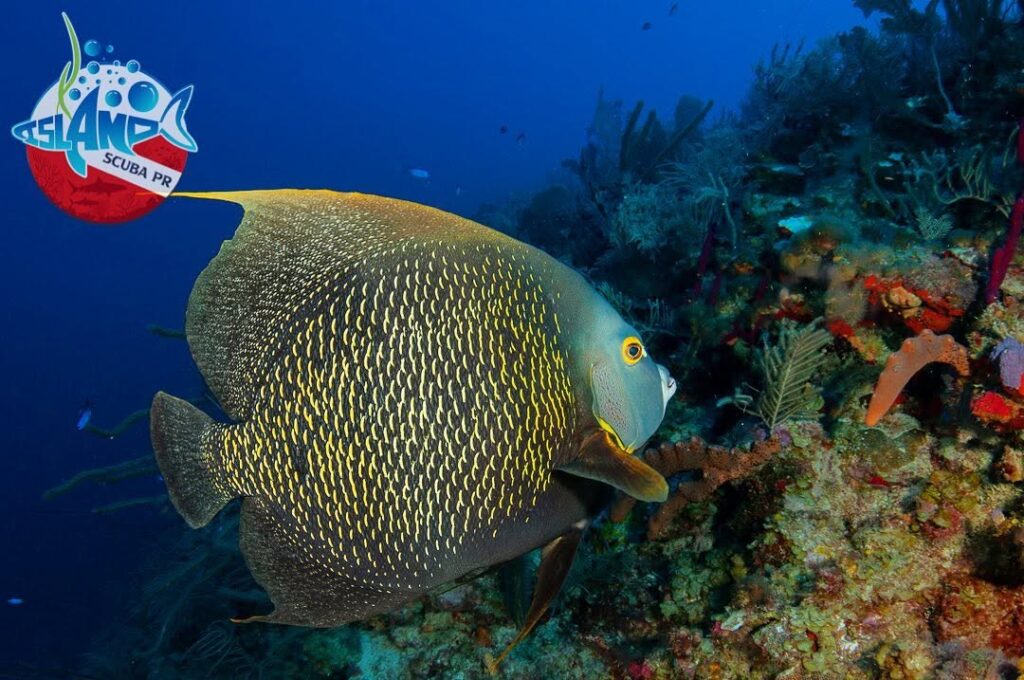
- Queen Angelfish and French Angelfish: Towering, disc-shaped fish that cruise boldly along reef drop-offs, showcasing striking electric blues, brilliant yellows, and intricate geometric scales.
- Surgeonfish and Blue Tangs: Often congregating in large, roving schools that sweep over the reef to overwhelm territorial damselfish and feed on turf algae.
- Trumpetfish: Masters of vertical mimicry, aligning their long, slender bodies alongside sea whips or shadowing larger herbivorous fish to ambush unsuspecting small fry.
Open Water and Pelagic Visitors
Beyond the shelter of the barrier systems, where the insular shelf plunges thousands of feet into oceanic waters, the marine landscape shifts toward powerful open-ocean travelers:
- Tarpon: Armored in large, reflective silver scales, these primitive sportfish aggregate in immense schools near coastal caves, mangroves, and pier structures, often exceeding six feet in length.
- Reef and Pelagic Sharks: Caribbean reef sharks and docile nurse sharks are common fixtures along deep shelf walls and coral caves. Further out along the shelf edge, blacktip sharks occasionally sweep in from blue water.
- Spotted Eagle Rays: Defined by pointed pectoral wings, duck-billed snouts, and vivid white rings dotting their dark backs, these majestic rays frequently cruise outer drop-offs in synchronized formations.
- Humpback Whales: Between January and April, the Mona Passage off Puerto Rico’s western coast serves as a prime migratory corridor and calving ground. While typically observed from the surface, their haunting, resonant songs can be heard reverberating through the water column by divers miles offshore.
Puerto Rico’s underwater territory is a dynamic crossroads of tropical biodiversity. Respecting local sanctuary regulations, avoiding direct contact with fragile coral structures, and observing wildlife from a non-intrusive distance ensures that these intricate marine communities remain resilient for generations to come.