Scuba Diving in San Juan vs. the South Coast: Where Should You Book Your Dive?
When planning a dive trip to Puerto Rico, most travelers face an immediate fork in the road: stay close to the vibrant, historic energy of San Juan, or head south to the quiet shores of Guánica, Ensenada, and La Parguera.
Both regions offer access to Caribbean waters, but they deliver radically different underwater experiences. One prioritizes urban convenience and sheltered shore entries; the other offers world-class wall diving, exceptional visibility, and untouched marine wilderness.
Choosing the right destination comes down to your experience level, your schedule, and what you demand from your time below the surface. Here is an honest, side-by-side comparison to help you decide where to drop your fins.
1. Topography: Shallow Coves vs. A Thousand-Foot Abyss
The geological contrast between the northern Atlantic coast and the southern Caribbean shelf is the single biggest factor shaping your dive.
The San Juan Profile
Diving in San Juan is predominantly shallow and shore-based, clustered around spots like Escambrón Beach. You will navigate artificial reefs, sunken statues, scattered columns, and localized coral patches sitting between 15 and 40 feet of water. It is a contained, low-stress aquatic environment that feels more like an open-air aquarium than the open ocean.
The South Coast Profile
The south coast is dominated by the legendary continental shelf known as The Wall. Starting around 50 to 60 feet down, healthy coral terraces suddenly plunge into a sheer vertical drop falling 1,500 to over 2,000 feet into the blue. You are diving alongside weeping black coral trees, gargantuan barrel sponges, and natural caverns like The Chimney. It is expansive, high-drama Caribbean diving built for those who love depth and drift.
2. Visibility and Sea Conditions: The Weather Factor
Ocean conditions in Puerto Rico are shaped by the island’s central mountain range, which creates two distinct marine climates.
San Juan and the Atlantic Swell
Because San Juan faces the open North Atlantic, water clarity is vulnerable to weather. Heavy winter swells, urban runoff, and regular coastal rains frequently drop visibility down to 20 to 40 feet. While you can certainly get calm, clear mornings, conditions can shift rapidly depending on offshore weather systems.
The South Coast’s Rain Shadow Advantage
Southern towns like Guánica and Ensenada lie in a natural rain shadow, resulting in an arid coastal climate with minimal river runoff. Coupled with the protective lee of the island, the Caribbean side delivers glassy morning surface conditions and visibility that consistently ranges from 60 to over 100 feet year-round.
3. Marine Life: Urban Dwellers vs. Pelagic Encounters
Both coasts hold plenty of marine life, but the scale and variety reflect their habitats.
- In San Juan: You will find approachable reef critters that are well-accustomed to snorkelers and divers. Expect friendly green sea turtles, yellowtail snappers, sergeant majors, squid, and the occasional juvenile nurse shark tucked under a limestone ledge.
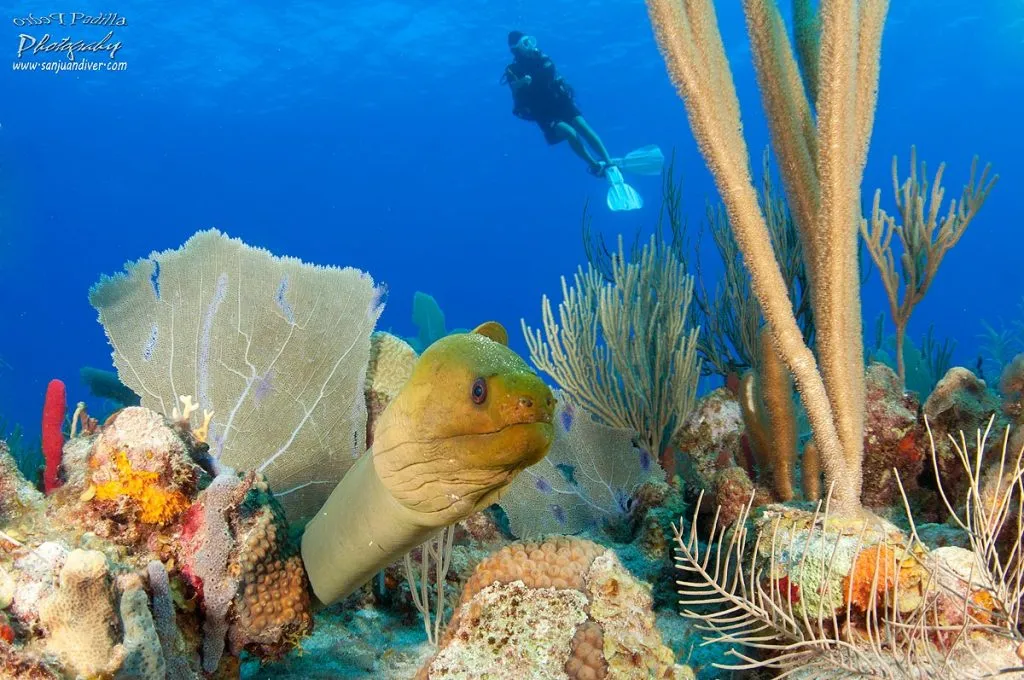
- On the South Coast: Reduced fishing pressure, offshore distance, and proximity to the deep trench attract open-water species alongside reef dwellers. Divers routinely encounter cruising reef sharks, spotted eagle rays gliding along the drop-off, southern stingrays, green morays, barracuda, and feeding hawksbill turtles set against sprawling hard corals.
4. Logistics and Transit: Convenience vs. Escape
Time management often dictates travel itineraries. Deciding where to dive means balancing transit time on the road against transit time on the water.
The Case for San Juan
If you are on a short business trip, traveling with non-divers, or staying in a resort in Condado or Isla Verde without a rental car, San Juan is hard to beat for logistics. You can grab an rideshare, walk directly into the water for a two-tank morning dive at Escambrón, and be sitting down for lunch in Old San Juan by 1:00 PM.
The Case for the South Coast
Diving the south requires commitment—either a scenic two-hour drive from San Juan across the mountains or a direct flight into regional airports in Ponce or Aguadilla. However, once you arrive in towns like Ensenada, that road investment pays off in pure operational ease. Dive boats depart straight from quiet waterfront docks, reaching the outer shelf in just 10 to 15 minutes. There are no crowded parking lots, no trudging through breaking surf with heavy gear on your back, and no urban rush.
5. Accommodation and the Stay-and-Dive Lifestyle
Your choice of diving also shapes your evening experience.
- San Juan: Perfect for travelers who thrive on late-night dining, cocktail lounges, historic walks through colonial forts, and casino nightlife. Your dive is a quick morning activity layered into an energetic city vacation.
- The South Coast: Designed for travelers seeking an authentic, slow-paced coastal getaway. Accommodations in Ensenada—ranging from boutique waterfront guest houses to minimalist coastal cabins perched right at the marina—mean you can wake up steps from the boat dock, sip your coffee over calm harbor waters, and end your afternoon hiking dry forest trails or watching the sunset over the Caribbean.
The Verdict: Where Should You Book? Book San Juan if:
- You have only 24 to 48 hours in Puerto Rico and cannot justify traveling outside the metropolitan area.
- You do not plan to rent a car.
- You are traveling with non-divers who want immediate access to shopping, museums, and urban amenities.
- You are a brand-new diver or nervous beginner looking for a shallow, guided shore refresher with zero depth exposure.
Book the South Coast if:
- You are an adventurous or certified diver who prioritizes water clarity, deep drops, and dramatic topography over city nightlife.
- You want to dive legendary Caribbean walls without the long, rough boat crossings common in the Virgin Islands or outer cays.
- You prefer small-group boat charters departing straight from a quiet marina dock rather than wading through crowded public beaches.
- You want an immersive dive vacation where your lodging, boat, and reef access sit within the same coastal footprint.
If your priority is a quick dip between city tours, San Juan checks the box. But if you came to Puerto Rico to experience true Caribbean diving at its peak, pack your bags, head south, and drop over the Wall.