PADI Open Water Certification in Puerto Rico: Costs, Timeline, and Requirements
Getting scuba certified permanently expands your travel map. Instead of floating on the surface with a snorkel, earning a PADI Open Water Diver certification gives you an internationally recognized credential to dive to 60 feet (18 meters) anywhere in the world.
Puerto Rico is one of the most streamlined destinations under the U.S. flag to complete this course. With warm Caribbean waters year-round, reliable visibility, and zero passport requirements for American travelers arriving on domestic flights, you can go from basic dive theory to full open-water reef exploration over a long weekend.
Here is the straightforward breakdown of candidate prerequisites, training schedules, course architecture, and tuition investments.
1. Safety Prerequisites and In-Water Requirements
Before enrolling, every student diver must meet standard international health and water-comfort benchmarks:
- Minimum Age: Students must be at least 10 years old. Divers aged 10 to 14 receive a Junior Open Water Diver certification, which upgrades to a full adult Open Water certification automatically upon turning 15.
- Water Skills Evaluation: Candidates must complete two basic comfort tests:
- A continuous 200-meter surface swim (or 300 meters using mask, snorkel, and fins) with no time limit.
- A continuous 10-minute water survival float or tread without fins or buoyancy aids.
- Medical Assessment: Every candidate fills out a standardized medical questionnaire. Any history of reactive airway conditions, cardiovascular issues, recurring sinus blockage, or ear equalization trauma requires written medical sign-off from a physician prior to in-water sessions.
2. Course Structure: The Three Core Phases
PADI certification operates on demonstrated mastery, not seat time. You advance only after performing every life-support skill calmly and correctly.
Phase 1: Digital Academic Theory
Complete your academic coursework online through self-paced eLearning before arriving at the coast. Topics cover ambient pressure mechanics, gas volume shifts, partial pressures, safe ascent limits, dive computer algorithms, and surface safety. Finishing the theory at home keeps your travel days focused on water work rather than desks.
Phase 2: Confined Water Skill Sessions
Conducted in a training pool or a calm, sheltered ocean cove, an instructor teaches you essential life-support skills. You will practice neutral buoyancy control, regulator retrieval and clearing, full mask clearing, controlled descents and ascents, air-sharing procedures, and equipment assembly.
Phase 3: Open Water Checkout Dives
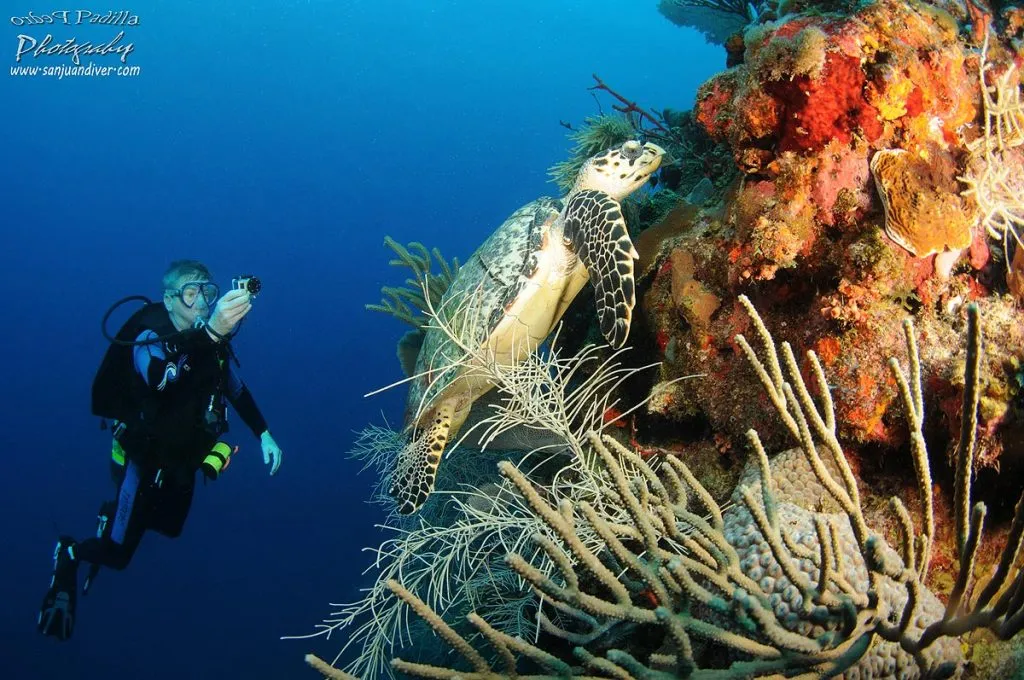
You will complete four full ocean dives over two consecutive days, with a maximum of two training dives per day. In open water, you demonstrate your confined-water skills over living reef substrate before spending the remaining bottom time exploring marine topography with your instructor.
3. Timelines and Scheduling Options
- Full Local Certification (3 to 4 Days): Complete your confined water skills and all four open-water checkout dives start-to-finish with your local on-island instructor.
- Hybrid Track (2.5 to 3 Days): Finish your digital theory prior to departure, then dedicate one day to confined-water pool work and two mornings to ocean checkout dives.
- Open Water Referral (2 Days): Complete your classroom modules and pool training with your local dive center at home, then complete only the four required ocean checkout dives in warm Caribbean waters.
Flight Interval Protocol: Always schedule at least 18 to 24 hours between your final ocean dive and boarding a commercial flight home to allow proper nitrogen off-gassing.
4. Regional Training Environments: Picking the Right Classroom
Where you train determines your water clarity, boat transit time, and overall learning environment:
- The Southern Shelf (Guánica, Ensenada, and La Parguera): The top choice for consistent visibility and glassy morning seas. Sheltered by the island’s central mountain range, this coastline receives minimal rain runoff, maintaining 70- to 100-foot visibility year-round. Boats depart directly from quiet harbor docks and reach calm reef shelves in just 10 to 15 minutes, removing city traffic and long offshore runs from your training days.
- San Juan Metro Area (Escambrón Beach): Convenient for travelers without a rental car staying exclusively in metropolitan hotel corridors. Training is conducted via shore entries in protected coves, though visibility shifts noticeably with seasonal Atlantic swells.
- Eastern Offshore Cays (Fajardo): Relies on larger charter catamarans heading to outer barrier reefs. Reef conditions are healthy, but transits involve longer open-water crossings that require early-morning departures.
5. Practical Clarifications
- Diving with Vision Correction: Soft contact lenses are completely safe under a dive mask, provided you keep your eyes closed during mask-clearing exercises. Dive masks with custom corrective optical lenses are also widely available.
- Skill Progression: Instruction is competency-driven. If mask clearing, ear equalization, or hover buoyancy requires additional practice, instructors provide extra pool repetitions until you feel confident before entering the ocean.
- Credential Expiration: A PADI Open Water Diver certification never expires. If you take a prolonged break from diving in the future, a brief half-day refresher course will restore your muscle memory and equipment familiarity.
Completing your certification along Puerto Rico’s southern coast pairs pristine reef shelves, sheltered conditions, and immediate dock departures into an ideal gateway for a lifetime of diving.